
If you just finished If Wishes Could Kill on Netflix and you’re sitting there with more questions than answers, you’re not alone. The Korean horror drama 2026 series — officially titled Girigo (기리고) — drops a mythology-dense finale that blends digital horror with centuries-old shamanic tradition. This is the complete If Wishes Could Kill ending explained, from the curse’s violent origins to what that mid-credits scene actually signals.
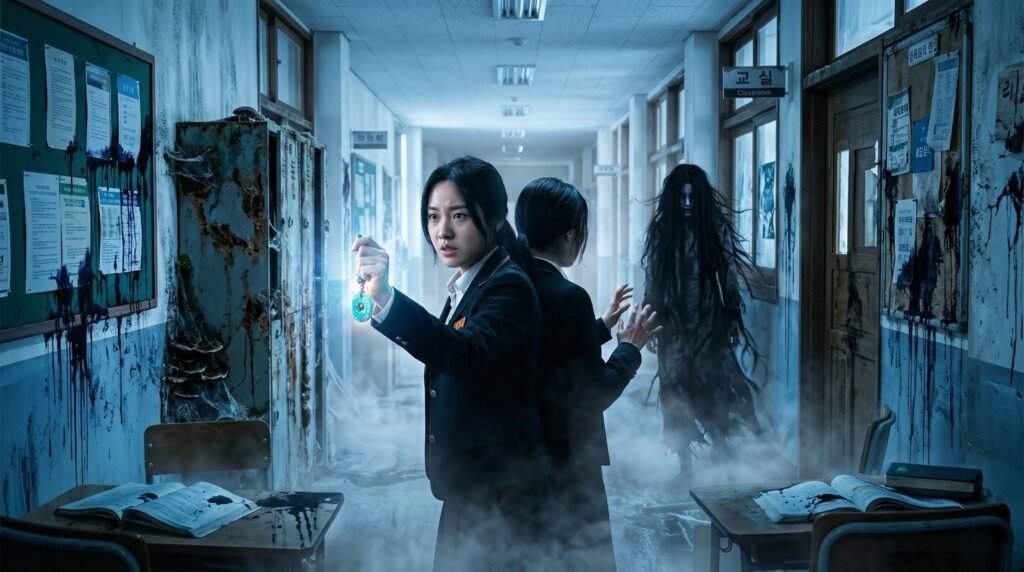
Released on April 24, 2026, exclusively on Netflix, the eight-episode series was written by Park Joong-seop and directed by Park Youn-seo. It stars Jeon So-young, Kang Mi-na, Baek Sun-ho, Hyun Woo-seok, and Lee Hyo-je — five young actors carrying a plot that goes far deeper than its “deadly app” premise suggests.
How the Girigo App Works: Rules of the Curse
Before unpacking the finale, it helps to understand exactly what the If Wishes Could Kill story summary comes down to mechanically — because the rules of Girigo are everything.
Here is how the app functions:
- A user records a wish video, stating their name and birthdate (their saju, or four pillars of destiny)
- The wish is granted — usually immediately and literally
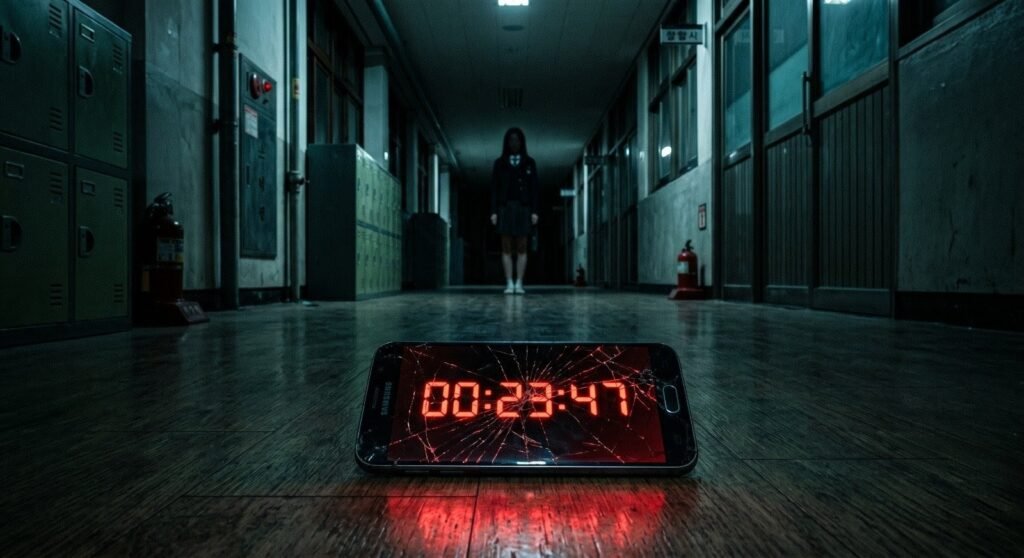
- A 24-hour red countdown timer begins on the screen
- When the timer hits zero, the wishmaker dies
- Critical loophole: The countdown pauses if someone else makes a new wish — a chain-letter mechanic that keeps the curse spreading
- Only users who have made a wish can see the spirits that haunt and manipulate them
This last point is crucial. The ghosts exploit the wishmakers’ emotional vulnerabilities — sending fake texts, fabricating overheard conversations, isolating victims from the people who could actually save them.
How the Curse Started in If Wishes Could Kill
The Girigo app did not start as a death sentence. Originally, it was a coding contest project — a simple, lighthearted app designed to let people send wishes out into the universe. Student Kwon Si-won, the daughter of a local shaman, built it with her friend Do Hye-ryung. It had no supernatural power at first.
The Ritual That Changed Everything
Si-won, estranged from her shaman mother and resentful of her mother’s interference in her friendship with Hye-ryung, performed a private blood ritual in her mother’s attic. That act — likely involving animal sacrifice — fused spiritual energy into the app’s code for the first time. This is the foundational answer to the question of how the curse started in If Wishes Could Kill: it was not designed. It was infected.
Si-won’s mother discovered what her daughter had done and attempted counter-rituals to undo the damage. She even tasked Hye-ryung with planting a protective amulet in Si-won’s bag. When Si-won found the amulet and realized Hye-ryung had been working with her mother, she felt betrayed. She exposed Hye-ryung’s private wish video publicly to humiliate her — a wish in which Hye-ryung had declared her feelings for a boy named Gi-tae. Gi-tae, emboldened, physically assaulted Hye-ryung.
Hye-ryung’s Sacrifice and Si-won’s Final Wish
What followed is the dark heart of the entire If Wishes Could Kill plot. Destroyed by humiliation, Hye-ryung used the shaman techniques Si-won’s mother had taught her. She created a deolmi doll — a binding effigy — attached Gi-tae’s name badge to it, and then slit her own throat while wishing for the death of every person who had wronged her. The sacrifice worked. Gi-tae died. But Si-won survived the doll’s control long enough to make her own wish on Girigo: that Hye-ryung’s curse would last forever.
That dying wish is why the app cannot simply be deleted or smashed. The Girigo app curse is not a piece of software. It is a living, ongoing supernatural contract powered by Si-won’s final breath.
The Role of Shamanism in If Wishes Could Kill
The series draws directly from Korean shamanic tradition, known as mu-dang, and uses it with genuine respect and specificity — similar to how the 2024 breakout film Exhuma handled its subject matter.
In If Wishes Could Kill, the shaman characters are portrayed as skilled, self-sacrificing figures with real power — not comic relief or genre window dressing. Ha-joon’s sister, Ha-sal (played by Jeon So-nee), and her partner Bang-wool are the two practitioners who help the main group understand what they are actually dealing with.
Why Shamanism Matters to the Ending
The shamanism role in If Wishes Could Kill‘s ending is central — not decorative. Ha-sal explains that because the curse is rooted in Si-won’s dying wish, it cannot be broken through any technological means. Deleting the app does nothing. Destroying the phone accomplishes nothing either — not the physical device, anyway. What needs to be destroyed is the spiritual anchor: Si-won’s phone from the moment of the original wish. That phone exists in the spirit world, not in the material one.
This is why Se-ah and Ha-sal must physically cross into the spirit world in the finale. It is not a metaphor. The show treats the spirit world as a real and dangerous location, and Ha-sal enters it fully knowing she may not come back.
The If Wishes Could Kill Finale Episode: What Actually Happens
The eighth episode opens the final confrontation between Se-ah’s group and the curse’s source.
Na-ri’s Betrayal
One of the most devastating turns in the detailed breakdown of the If Wishes Could Kill finale episode is Na-ri (Kang Mi-na). Throughout the series, Na-ri had drunkenly wished for the deaths of Hyeon-wook and Dong-jae — a secret she carried with guilt and shame. After Hyeon-wook dies, her guilt becomes unbearable.
Si-won’s spirit exploits this guilt masterfully. By manipulating text messages and manufactured “evidence” that her friends blamed her and didn’t care whether she lived, Na-ri is turned against the group. She becomes an antagonist in the finale — not out of cruelty, but out of profound, manufactured loneliness. It is a tragedy, not a villain origin story.

Se-ah and Ha-sal Enter the Spirit World
With Ha-sal holding off Si-won’s spirit in direct combat, Se-ah searches the spirit world for Si-won’s original phone. The plan: find it and destroy it, collapsing the foundation of the curse.
The challenge is that Na-ri actively interferes. Her betrayal is not a twist played for shock — it is the series’ argument that the Girigo app curse meaning goes beyond death. The real horror is what the curse does to trust between people who love each other.
Is the Girigo App Destroyed in the If Wishes Could Kill Ending?
The answer here requires nuance. Se-ah does locate the phone and manages to destroy it in the spirit world. The immediate curse — the active countdowns, the spreading infection — is broken.
However, the series does not end on clean resolution. The mid-credits scene suggests the curse has not been fully extinguished. Whether this is a setup for a second season or a deliberate statement about the nature of curses — that some grief and resentment cannot be fully erased — is left open.
The show implies that Si-won’s wish for the curse to last forever created a spiritual loop that no single act can fully close. The Girigo app curse meaning, in its deepest reading, is about unresolved pain finding new hosts. As long as people carry desperate desires and emotional wounds, the conditions for a Girigo will always exist.
Why the Curse Continues After the Ending of If Wishes Could Kill
This is the question the finale leaves most deliberately unanswered. There are two ways to read it:
Reading 1: Narrative setup. The mid-credits scene exists to launch a potential Season 2, with new characters, a new outbreak of the app, or a new face to the curse.
Reading 2: Thematic statement. The reason the curse continues after the ending of If Wishes Could Kill is that the conditions that created it — teenage cruelty, betrayal, isolation, and the desperate human need to be seen and valued — are not resolved by destroying one phone in one spirit world. Girigo is, at its core, a horror about what social humiliation does to people when there is no one left to witness their pain.
This reading aligns with the show’s core philosophy: that the app does not create darkness, it simply amplifies what is already there.
Key Insights: What Makes This Finale Work (and Where It Struggles)
What lands:
- The shamanic mythology is internally consistent and well-researched
- Na-ri’s arc is genuinely heartbreaking and thematically coherent
- The spirit world sequences have real visual ambition
- The show avoids the easy resolution of “delete the app and everything is fine”
What frustrates:
- Ha-sal’s fate in the finale is left deliberately vague, which some viewers find unsatisfying
- The mid-credits scene raises questions without earning them narratively
- The rules of the spirit world are not fully explained before Se-ah is dropped into it
If Wishes Could Kill Characters: Who Survives?
Here is a quick status rundown after the finale:
- Se-ah — Survives; she completes the mission in the spirit world
- Na-ri — Her fate is ambiguous; the show leaves her arc open-ended
- Ha-joon — Survives; his analytical approach ultimately helped crack the curse’s logic
- Hyeon-wook — Dies early in the series; his death is the inciting tragedy
- Geon-woo — Endangered throughout; his fate is connected to Se-ah’s success
- Ha-sal — Her status after exiting the spirit world is one of the finale’s deliberate mysteries
Conclusion: The Real Meaning of the If Wishes Could Kill Ending Explained
The If Wishes Could Kill ending explained is ultimately not about an app. It is about two teenage girls — Si-won and Hye-ryung — whose friendship curdled into something unforgivable, and the supernatural consequence of that destruction. The Girigo app curse meaning is rooted in genuine Korean shamanic tradition: the idea that a dying wish made in rage and blood carries real power, and that undoing it requires equal sacrifice.
The finale’s most honest moment is not the spirit world battle. It is Na-ri — guilt-ridden, manipulated, isolated — turning against the friends who loved her because she believed she was already hated. That is the show’s real horror. Not the countdown timer. Not the ghosts. The speed at which trust can be destroyed when someone is already looking for proof they were never valued.
This Korean horror drama 2026 is imperfect in execution but pointed in its themes. Whether Netflix green-lights a second season or not, the story it tells about shame, technology, and the way grief metastasizes into violence is complete enough to stand on its own.
FAQ Schema Section
Q1: What is the Girigo app in If Wishes Could Kill? The Girigo app is a wish-granting mobile application that appears in the Netflix K-drama If Wishes Could Kill. Users record a wish video with their name and birthdate visible; the wish is granted immediately, but a 24-hour countdown begins afterward. When the timer hits zero, the user dies. The app is powered by a supernatural curse rooted in Korean shamanic tradition, not conventional software.
Q2: How did the curse start in If Wishes Could Kill? The curse originated when student Kwon Si-won, the daughter of a shaman, performed a blood ritual that fused spiritual energy into her coding project — an early version of the Girigo app. When her friend Do Hye-ryung later sacrificed herself and wished death on her tormentors, Si-won’s own dying wish — that Hye-ryung’s curse last forever — locked the malevolent power into the app permanently.
Q3: Is the Girigo app destroyed at the end of If Wishes Could Kill? Partially. Se-ah destroys Si-won’s original phone in the spirit world, which breaks the active cycle of curses. However, the mid-credits scene suggests the curse has not been fully eliminated, leaving the door open for a potential second season or implying that the spiritual conditions for Girigo’s return still exist.
Q4: What role does shamanism play in If Wishes Could Kill? Shamanism is central to both the curse’s origin and its resolution. The show draws on Korean mu-dang tradition — including blood rituals, protective amulets, deolmi binding dolls, and the ability to enter the spirit world. Shaman character Ha-sal and her partner Bang-wool serve as the group’s primary guides in understanding and fighting the supernatural threat.
Q5: Why does Na-ri betray her friends in the finale? Na-ri turns against her friends because Si-won’s spirit exploits her guilt over having wished for a friend’s death earlier in the series. By fabricating text messages and fake conversations designed to make Na-ri believe her friends blamed her and wanted her dead, the curse isolates her emotionally. Her betrayal is not malicious — it is a manipulation that the show frames as one of the Girigo app’s most insidious weapons: the destruction of trust between people who love each other.
