
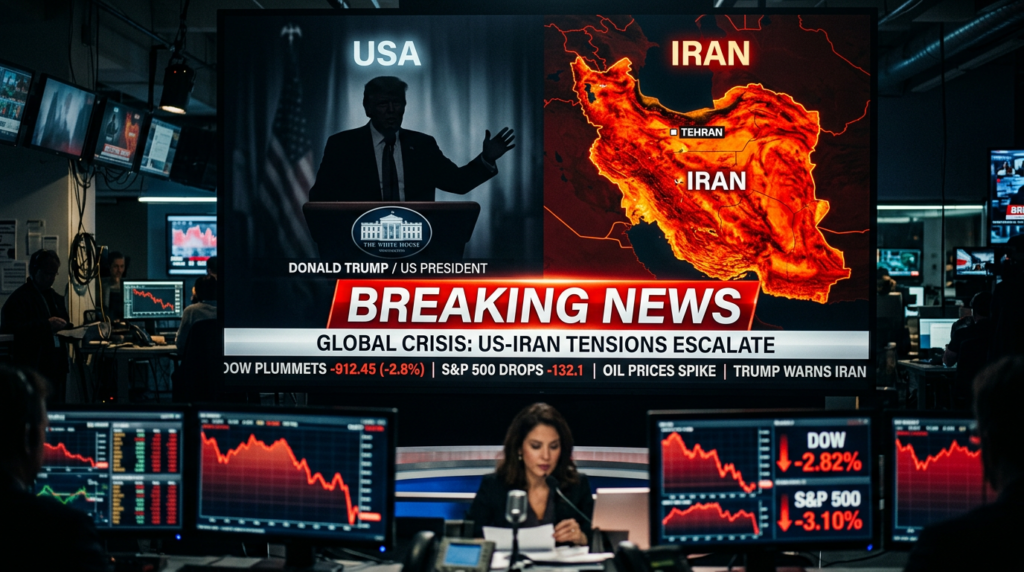
The Trump Iran deadline impact on global markets has become the defining financial story of early 2026 — and the pressure is only intensifying. President Donald Trump issued a stark ultimatum on Sunday, warning Iran it would be “living in Hell” if the Strait of Hormuz is not fully reopened by Tuesday, 8 p.m. ET. At the same time, Trump told Fox News he saw a “good chance” for a diplomatic deal by Monday — sending contradictory signals that have left investors scrambling to position for two completely opposite outcomes.
This is not background noise. This is a market-moving crisis with real consequences for oil prices, equity indexes, bond yields, global trade, and everyday consumers. Whether you are a retail investor, a portfolio manager, or simply someone watching their fuel costs climb, understanding what is happening — and why — is essential right now.
The Strait of Hormuz: Why One Waterway Can Wreck the Global Economy
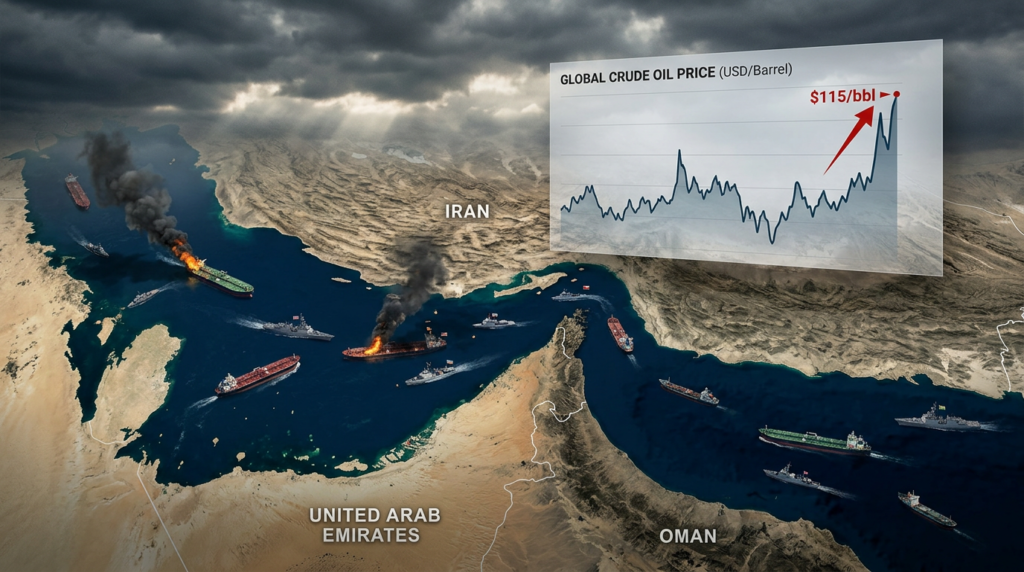
The Strait of Hormuz is a critical oil chokepoint through which roughly one-fifth of the world’s oil supplies flowed before the conflict began on February 28. When that artery gets blocked, the ripple effects are immediate and severe.
Since the war broke out, shipping traffic through the strait has remained 95% lower than pre-war levels. Brent crude prices surged to $109.77 per barrel — about 50% higher than before hostilities began — while U.S. West Texas Intermediate soared 66% to trade around $111.20.
To put that in everyday terms: the national average gasoline price in the U.S. reached $4.11 per gallon on Sunday, up from $2.98 before the war — a near 38% jump in just over a month. In Europe, jet fuel shortages forced Italy to limit supplies at several airports, while multiple Asian nations have already begun rationing energy.
This is what a Strait of Hormuz crisis looks like in practice — and it is not theoretical.
How the US-Iran Conflict Is Driving Stock Market Volatility
Equity Markets Are Caught Between Hope and Fear
Investors are caught between positioning for a swift deal that ends the war and a significant escalation that could send oil prices and bond yields soaring further. That binary tension is the core reason markets have been so volatile.
U.S. stock futures tumbled overnight, with Dow Jones Industrial Average futures shedding 253 points, or 0.5%. S&P 500 and Nasdaq-100 futures lost 0.6% and 0.7% respectively.
The pattern is now familiar to market watchers: Trump signals progress toward a deal, equities rally. Trump escalates his rhetoric, equities sell off. Mixed messaging has led to market volatility accompanied by choppy oil trading throughout the conflict.
Asian and European Markets Feel the Shockwaves
The US Iran conflict effect on Asian and US markets has been stark. Japan’s Nikkei 225 dropped 3.5%, South Korea’s Kospi fell 6.5%, Hong Kong’s Hang Seng slipped 3.8%, and the Shanghai Composite declined 3.6% during a particularly volatile session.
In Europe, natural gas futures traded near €60 per MWh at the open before easing on ceasefire signals, and major equity indexes moved broadly lower. The message from global markets is consistent: no region is immune when a critical energy corridor is effectively closed.

What Analysts Are Saying: Expert Views on Geopolitical Risk
Rob Subbaraman, head of global macro research at Nomura, put it plainly: “Markets are on edge, as time is running out and the outcomes are binary — truce or escalation.”
Subbaraman warned that the war has “lasted long enough for there to be serious inflation spikes around the world,” adding that if the conflict escalates further, “the inflation shock could soon escalate into a growth shock, with demand destruction and outright stagflation.”
That word — stagflation — should get every investor’s attention. It describes a toxic combination of high inflation and stagnant economic growth that is notoriously difficult for central banks to fight. It is the scenario the Federal Reserve fears most.
The 10-year Treasury yield climbed to 4.362%, up from 3.962% before the conflict started, as investors pared back expectations for interest rate cuts by the Federal Reserve this year. Rising yields mean rising borrowing costs for mortgages, corporate debt, and government financing — a broad headwind for growth.
George Efstathopoulos, portfolio manager at Fidelity International, noted that markets had braced for a “binary outcome” — either a clear exit signal or prolonged escalation — and said Trump’s mixed signals further fuel risk-off sentiment as investors wait for uncertainty to subside.
Iran War Impact on Oil Prices: Key Data Points
Here is a concise summary of what the Iran conflict oil prices data shows as of April 6, 2026:
| Metric | Pre-War Level | Current Level | Change |
|---|---|---|---|
| Brent Crude (per barrel) | ~$73 | ~$109–$112 | +50% |
| WTI Crude (per barrel) | ~$67 | ~$111–$114 | +66% |
| U.S. Average Gas Price | $2.98/gal | $4.11/gal | +38% |
| Strait of Hormuz Traffic | 100% | ~5% | –95% |
| 10-Year Treasury Yield | 3.962% | 4.362% | +40 bps |
Goldman Sachs sharply raised its oil price forecasts, expecting Brent to average $110 in March and April — up from a prior forecast of $98, representing a 62% jump from the 2025 annual average.
The International Energy Agency’s executive director Fatih Birol warned that the situation in the Middle East is “very severe” and far worse than the two oil shocks of the 1970s and the Russia-Ukraine war on gas, combined. That is not a comparison analysts make lightly.
Even a Deal Won’t Immediately Fix Markets — Here’s Why
This is the counterintuitive reality that many investors are missing: a ceasefire would be welcome news, but it would not instantly normalize conditions.
Analysts noted that even a diplomatic breakthrough may not bring quick relief to markets. As one strategist observed: “Even in a scenario where the Strait of Hormuz remains open, the damage to confidence and supply chains is already done — things don’t just snap back to normal.”
Consider the structural damage already done:
- Supply chain disruptions across oil, LNG, and petrochemicals will take months to unwind
- Inflationary pressures are already embedded in consumer prices globally
- Investor confidence has been rattled, and risk premiums in equity and debt markets will persist
- Energy rationing in Asia is disrupting manufacturing output
- Ceasefire talks mediated by Gulf states are targeting a possible 45-day truce, but the odds of reaching a partial deal before the Tuesday deadline were described as slim.
Markets will likely remain headline-sensitive, with sharp swings both ways as narratives shift, analysts warned — meaning stock market volatility in 2026 tied to this crisis has not peaked yet.
Safe Investment Strategies During Geopolitical Tensions
Navigating investor sentiment during a geopolitical crisis requires discipline and a clear framework. Here are actionable strategies used by institutional investors in periods of elevated conflict risk:
1. Increase Exposure to Energy Equities (Selectively) Oil majors — particularly those with domestic U.S. production — benefit directly from higher crude prices. But be selective: refining-heavy players benefit more than pure E&P companies exposed to global logistics.
2. Hold or Add Gold and Precious Metals Gold is the classic safe-haven play. During the Russia-Ukraine conflict in 2022, gold climbed over 10% in the first month of hostilities. In a stagflationary environment, real assets outperform.
3. Reduce Duration Risk in Bonds The fixed-income market is already quietly repricing the inflation outlook, with 10-year Treasury yields near their highest levels since mid-2025. Long-duration bonds are vulnerable if inflation expectations continue rising.
4. Avoid Overconcentration in Asian Export Economies South Korea, Japan, Taiwan, and China are highly exposed to energy import disruption. Their equity markets have already reflected this, but further downside risk remains until the Strait reopens.
5. Watch the Dollar The U.S. dollar typically strengthens during geopolitical crises as a safe-haven currency. A stronger dollar puts pressure on emerging markets with dollar-denominated debt.
6. Don’t Chase Headlines — Follow the Data Senior macro strategist Homin Lin at Lombard Odier advised investors to be careful about trading from headline to headline, noting that the path forward depends on whether a favorable outcome can be reached without another round of escalation. Reactive trading in this environment is expensive.
The Bigger Picture: Global Trade Risks from Middle East Conflict
The global trade risks due to Middle East conflict extend well beyond oil. The Persian Gulf region accounts for:
- ~20% of global LNG supply — critical for Europe and Asia
- ~25% of seaborne oil that flows through a single chokepoint
- Significant petrochemical feedstocks used in plastics, fertilizers, and pharmaceuticals
The month-long war and effective blockade of the Strait of Hormuz threaten to plunge the world into one of its most severe energy crises in history, analysts warned.
IEA member nations agreed on March 11 to release a record 400 million barrels of oil from strategic stockpiles to address the supply disruption — the largest coordinated release in the agency’s history. Meanwhile, OPEC+ raised production quotas by 206,000 barrels per day for May, though the move appeared largely symbolic given that the war has constrained shipments from several members.
These emergency measures are cushioning the blow but not eliminating it.
Conclusion: Staying Rational When Markets Are Not
The Trump Iran deadline impact on global markets is a real-time stress test for global financial resilience — and markets are under significant pressure. Oil prices are up 50–66% since February. Equity markets are swinging violently with every tweet and press statement. Inflation is re-accelerating. Rate cut expectations are evaporating.
The honest assessment is this: the outcome remains genuinely uncertain. A deal could materialize in days; an escalation could send Brent crude past $130. What separates successful investors from reactive ones in moments like this is preparation, not prediction.
Stick to fundamentals. Diversify across asset classes. Limit leverage. Hold cash optionality. And monitor not just the headlines but the underlying data — shipping traffic through the Strait, U.S. Treasury yields, Fed commentary, and Goldman’s updated oil forecasts — to form a grounded view of where markets are headed.
The geopolitical fog is thick right now. Clear-headed analysis is your most valuable asset.
FAQ: Trump Iran Conflict and Global Market Impact
Schema-Ready FAQ Section
Q1: What is Trump’s Iran ultimatum and why does it matter for markets? President Trump issued a deadline demanding Iran reopen the Strait of Hormuz or face military strikes on its power plants and infrastructure. Because roughly one-fifth of the world’s oil flows through the strait, any prolonged closure drives oil prices sharply higher, fuels inflation globally, and creates extreme uncertainty for equity investors — all of which directly move financial markets.
Q2: Why are oil prices rising due to the Iran conflict? The Strait of Hormuz blockade has cut shipping traffic to approximately 5% of pre-war levels. With a massive share of global oil and LNG supply effectively offline, basic supply-demand economics push prices up. Brent crude is up approximately 50% and WTI up 66% since the war began in late February 2026.
Q3: What happens to the stock market if the US goes to war with Iran? History and current data show that prolonged military conflict near major energy chokepoints triggers a sell-off in equities, a spike in oil prices, a rally in safe-haven assets like gold and the U.S. dollar, and rising bond yields as inflation expectations increase. Emerging markets and Asian export-dependent economies are typically hit hardest.
Q4: What are safe investments during the Iran geopolitical crisis? In the current environment, institutional investors are rotating toward energy sector equities, gold and commodities, short-duration bonds, and the U.S. dollar. Reducing exposure to long-duration fixed income and Asian equities is also a common defensive posture during elevated Middle East conflict risk.
Q5: What happens if the Strait of Hormuz stays closed long-term? A prolonged closure could trigger a global energy crisis worse than the 1970s oil shocks, according to the IEA. It would cause sustained high inflation, possible stagflation, supply chain disruption across multiple industries, and significant economic contraction in energy-import-dependent nations across Asia and Europe. Central banks would face an impossible dilemma between fighting inflation and supporting growth.
